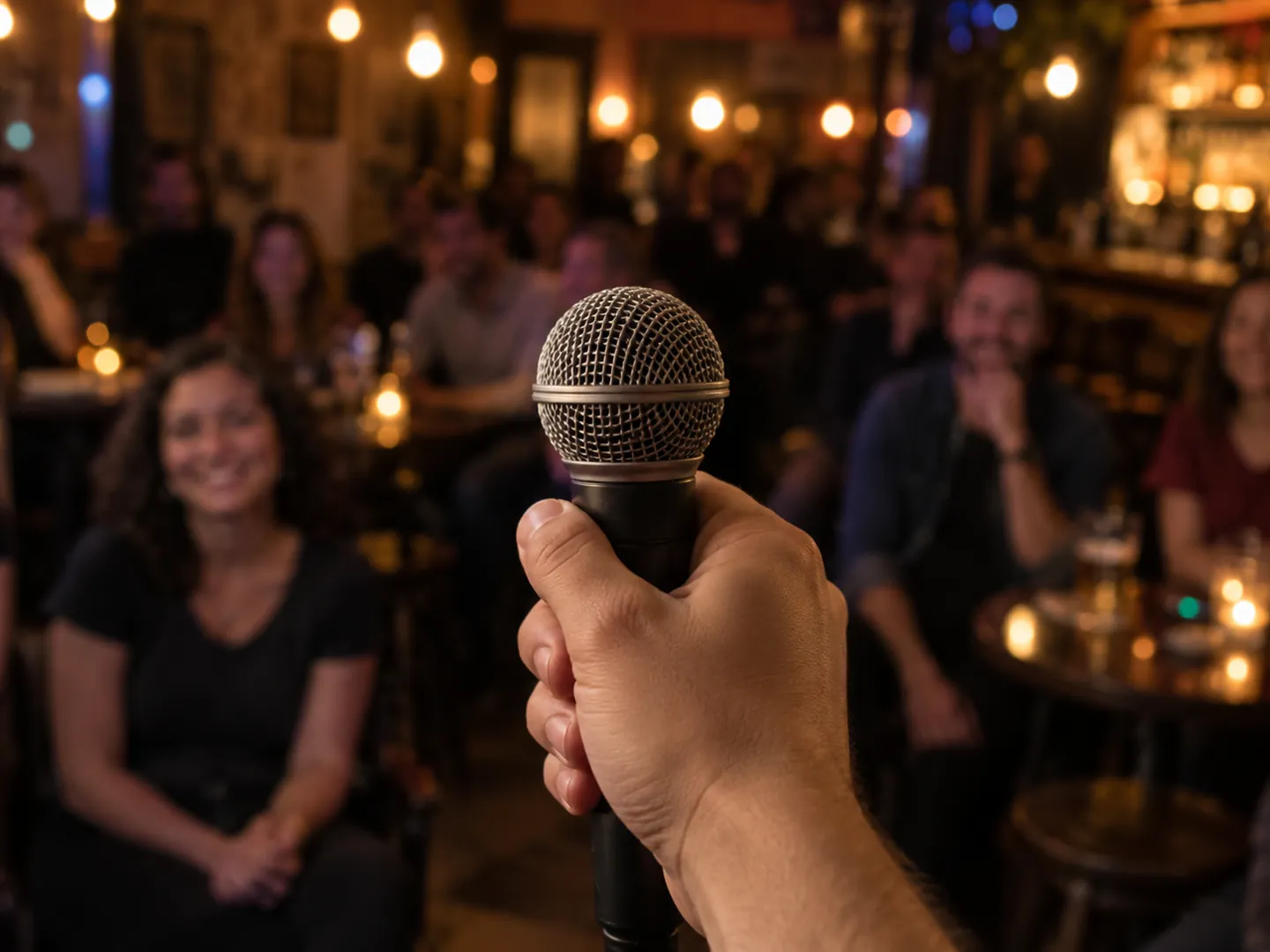
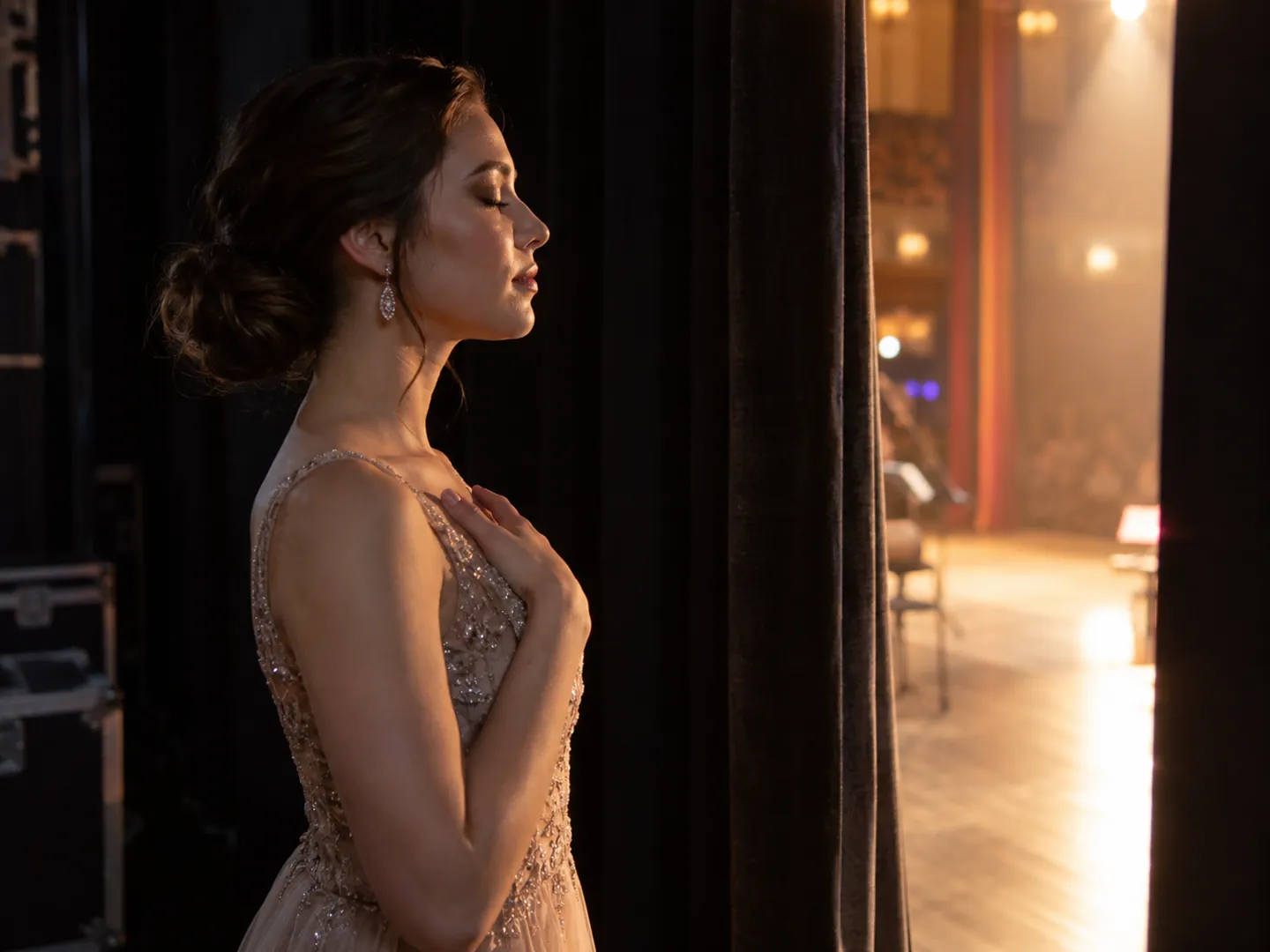
Most people feel anxious before singing or speaking in front of others. Psychology studies suggest audiences notice less of it than speakers expect, and that calling the feeling excitement can help more than trying to calm down.
In studies including karaoke singing and public speaking, people who reappraised anxiety as excitement felt more excited and performed better than those who tried to calm down.
Pick a moment to see what the research and NHS guidance suggest. The bar shows how close you are to the spotlight.
Drawn from published psychology studies on performance anxiety and NHS self-help guidance. Not a treatment plan: see a GP if fear of social situations is affecting your life.
TWO NUMBERS WORTH KNOWING
Half of us, we think.
One number for what people expect, one for how common real social phobia is.
≈ 51%
Share of people students guessed are extremely anxious public speakers
Asked to estimate, 183 university students guessed about half of people are extremely anxious speaking in public, and only about 23% very calm.
BELIEFS · CRSP 2010
11.6%
University students with social phobia in a Brazilian study
Among 2,319 randomly selected students, fear of public speaking was the most common social fear. Only 2 of 237 with social phobia had been diagnosed and treated.
SOCIAL PHOBIA · J AFFECT DISORD 2012
In one speech study, 36% of speakers thought the audience would rate them as more anxious than they actually were.
FOUR THINGS TO TRY
Before you step up.
Simple strategies from the studies and NHS self-help guidance.
Reframe the racing heart
Tell yourself 'I am excited' rather than 'calm down'. It matches how aroused your body already feels.
Remember the illusion
Your nerves feel obvious from the inside. In studies, simply knowing this made speakers feel better.
Breathe for a few minutes
Breathe gently into your belly, counting 1 to 5 in and out. The NHS suggests at least 5 minutes, and practising regularly.
Build up in steps
Start with something smaller, such as a short slot or a friendly crowd, and get comfortable with each part before the next.
AI-generated image, not a photograph of a real person or place.AI-generated image, not a photograph of a real person or place.
WHEN IT'S MORE THAN NERVES
Shyness or social anxiety?
The NHS describes social anxiety as more than shyness: a fear that doesn't go away and affects everyday activities, relationships and work or school. It usually starts in the teenage years and can bring sweating, trembling or a pounding heartbeat.
It's a good idea to see a GP if it's having a big impact on your life, or you can refer yourself to an NHS talking therapies service. CBT is generally considered the best treatment.
Questions
Questions people ask
Can the audience tell how nervous I am?
Less than you think. Studies of the illusion of transparency found speakers overestimate how apparent their nervousness is to others.
Should I try to calm down before I perform?
One set of studies found that reappraising anxiety as excitement, for example by saying 'I am excited', led to better karaoke, speaking and maths performance than trying to calm down.
Is stage fright common?
Very. In one Brazilian study of university students, fear of public speaking was the most common social fear, and students guess about half of people are extremely anxious speakers.
What breathing exercise helps with nerves?
The NHS suggests breathing into your belly, in through the nose and out through the mouth, counting 1 to 5 each way, for at least 5 minutes.
When is stage fright a problem?
If fear of social situations is long-term, overwhelming and affecting daily life, it may be social anxiety. See a GP or refer yourself to NHS talking therapies.